The One That Got Away: What the Dresses You Almost Bought Say About Your True Style
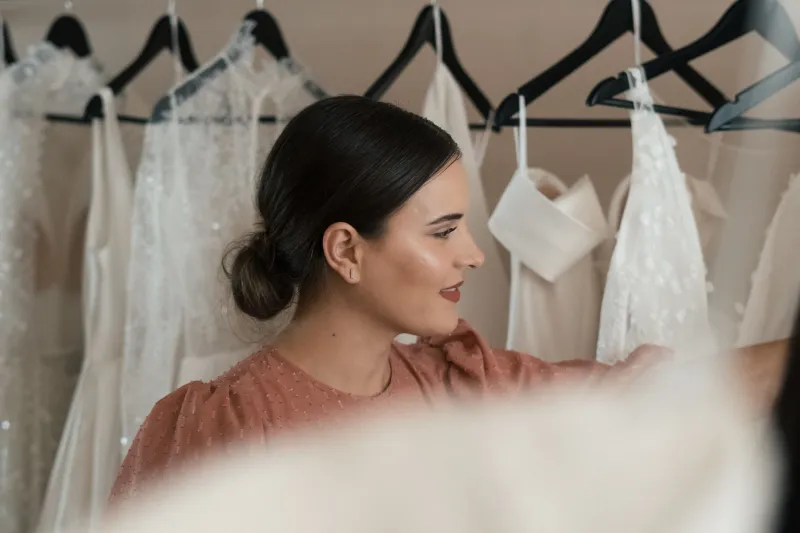
You know the feeling. You're scrolling through a site — maybe even this one — and something stops you cold. A dress that makes your heart do a small, involuntary thing. You click. You stare. You add it to your cart. And then... you close the tab.
Or maybe you made it all the way to the fitting room, stood under those slightly-too-harsh lights, turned sideways, and walked out empty-handed.
We've all been there. And most of us write it off as indecision or budget restraint or just "not the right time." But here's the thing: those almost-purchases are telling you something. Something honest. Something your actual closet — full of safe choices and things-that-were-on-sale — might not be saying at all.
Your Cart Is a Window Into Your Aspirational Self
There's a reason therapists and stylists alike pay attention to what people want before they look at what people have. The dresses that catch your eye — the ones you linger on, screenshot, or send to your group chat — represent a version of yourself you're reaching toward.
Maybe you keep gravitating toward structured, polished sheath dresses even though your closet is full of casual sundresses. Maybe every dress you save has a deep, saturated color, but everything you actually own is neutral. That gap? That's data.
Think of your saved items and abandoned carts as a mood board you made without trying. The patterns there are worth examining honestly. Not to judge yourself, but to ask: what is this version of me trying to say?
The Fitting Room Moment of Truth
Walking away from a dress you tried on is a different kind of signal — and it's worth unpacking carefully, because not all hesitation means the same thing.
Sometimes you walked away because the fit was genuinely off. Maybe the shoulders were wrong, the waist hit in a weird spot, or the length didn't work with your height. That's useful, practical information. It tells you something about the silhouettes and proportions that actually work for your body — not as a limitation, but as a guide.
But other times? You walked away because the dress felt like too much. Too bright. Too fitted. Too noticeable. Too unlike the version of yourself you default to presenting to the world. And that hesitation is worth sitting with, because it often has less to do with the dress and more to do with how comfortable you are taking up space.
Ask yourself honestly: did you leave that dress behind because it wasn't right — or because you didn't feel ready for it?
The Regret Spiral (And What It's Actually About)
Ah, the purchase you didn't make and can't stop thinking about. You went back to the site and it was sold out. You saw someone else wearing it and felt that little pang. You still think about the emerald green wrap dress from two summers ago.
Style regret is real, and it's not trivial. It points directly at the gap between the choices we make out of habit or practicality and the choices we'd make if we trusted ourselves more.
Here's a reframe that might help: instead of mourning the specific dress, treat the memory as a brief. What was it about that piece? The color? The neckline? The way it moved? The feeling you imagined having while wearing it? Those specifics are a shopping list in disguise — not for that exact dress, but for the qualities you keep circling back to.
How to Use Your Near-Misses to Actually Shop Better
Once you start paying attention to your patterns of hesitation, you can put that awareness to work. Here's how:
Keep a running list of the dresses you almost bought. Not to torture yourself, but to track what keeps pulling at you. After a month or two, you'll start to see themes — specific colors, silhouettes, fabrics, or vibes that show up again and again.
Notice the reason you walked away. Was it fit? Budget? Fear? Practicality? Each reason points to a different kind of action. A fit issue is a styling problem to solve. A budget issue is a prioritization conversation. Fear or self-doubt is an invitation to push gently past your comfort zone.
Give yourself a 48-hour rule on hesitation. If you're still thinking about a dress two days after you first saw it, that's not wishy-washy indecision — that's genuine desire. It's worth revisiting.
Try on the dress you'd never usually try on. Next time you're shopping in-store, grab one thing that feels like a stretch. Something brighter, bolder, or more dramatic than your usual. You don't have to buy it. But trying it on costs nothing and might surprise you completely.
Bridging the Gap Between Who You Are and Who You're Becoming
Here's the thing about style that nobody really talks about enough: it's not static. You're not the same person you were five years ago, and your wardrobe probably shouldn't be either.
The dresses we almost buy often represent the person we're in the process of becoming — someone a little more confident, a little more expressive, a little more willing to be seen. And it makes sense that we'd hesitate. Change, even the fun kind, can feel vulnerable.
But your closet should be a place that meets you where you are and gives you room to grow. That means occasionally taking a chance on the dress that feels like a little bit of a leap. Not recklessly — nobody needs a closet full of pieces they're afraid to wear — but thoughtfully, intentionally, in service of the story you're writing about yourself.
The dress you almost bought might be exactly the one worth going back for.
A Few Questions Worth Asking Before You Walk Away
Next time you're standing in a fitting room or hovering over the "remove from cart" button, try running through these:
- Is this dress not right, or am I just not used to looking like this?
- Would I feel excited to wear this, or just relieved to own it?
- What's the actual reason I'm hesitating?
- If a friend described this dress to me, would I tell her to go back and get it?
That last one tends to cut through the noise pretty quickly.
Your instincts about clothing are smarter than you give them credit for. The dresses that haunt you, the ones you tried and left behind, the ones that made you feel something before you talked yourself out of it — they all have something to say. Start listening, and your closet will start to feel a lot more like you.