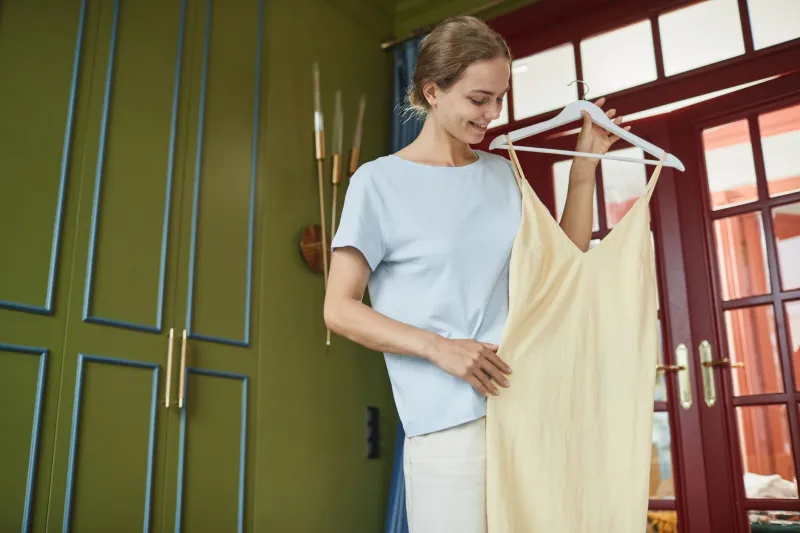
One Dress, Endless Chapters: The Art of Building Your Wardrobe Around a Single Anchor Piece

There's a certain kind of closet paralysis that hits at the worst possible moment — usually when you're running late and staring at a rail of clothes that somehow produces nothing to wear. Sound familiar? Here's the thing: more options don't automatically mean more outfits. Sometimes the most powerful move you can make is to go smaller, not bigger.
That's the whole idea behind the anchor dress. It's not a trend piece, and it's definitely not a one-trick pony. It's the dress you reach for again and again because it works — for your body, your life, and the dozen different roles you play in a given week. Think of it as the foundation of your own personal dress uniform, the piece everything else orbits around.
So how do you find it? And once you do, how do you keep it feeling fresh? Let's get into it.
What Makes a Dress an Anchor?
Not every dress earns anchor status. A great cocktail dress you wear twice a year is wonderful, but it's not doing the heavy lifting we're talking about here. An anchor dress has a specific job description: it needs to be adaptable, seasonless (or close to it), and genuinely flattering in a way that doesn't require much effort on your part.
The silhouettes that tend to earn this title most often are wrap dresses, shirt dresses, and clean A-line styles. Here's why:
- Wrap dresses adjust naturally to your body and layer beautifully under blazers, denim jackets, and oversized cardigans.
- Shirt dresses straddle the line between casual and polished with ease, and they respond incredibly well to belting, tucking, and accessory changes.
- A-line midi dresses in a solid or subtle print give you a classic base that reads differently depending on what you pair with them.
The key qualities to look for: a neckline that works without a necklace (and with one), a hemline that functions in both flats and heels, and a fabric weight that doesn't immediately scream one specific season.
Finding the Right Fit for Your Life
Before you start shopping, do a quick audit of your actual lifestyle. Not your aspirational lifestyle — your real one. If you work from home three days a week, commute the other two, and spend weekends doing farmers markets and the occasional dinner out, your anchor dress looks very different from someone who's in a client-facing office five days a week.
Ask yourself:
- What do I actually do most days? Your anchor dress should serve your most frequent occasions, not your rarest ones.
- What do I already own that I love layering? If you have a killer leather jacket or a blazer you wear constantly, make sure your anchor dress plays well with it.
- What colors am I already drawn to? Neutrals are the obvious choice for versatility, but a deep jewel tone or a classic navy can work just as well if it's a color you consistently reach for.
Fit is non-negotiable here. An anchor dress that requires constant tugging, adjusting, or second-guessing isn't doing its job. When you put it on, you should feel like yourself — comfortable, put-together, and ready to move through your day without thinking about your clothes.
The Remix Formula: Getting Dozens of Outfits From One Dress
This is where the real fun starts. Once you've identified your anchor piece, the goal is to build a small ecosystem of layers, accessories, and shoes around it that can transform a single dress into what feels like a completely different outfit.
Layer it up for fall and winter. A midi wrap dress in a warm terra cotta looks completely different under a camel-colored trench versus a chunky cream knit cardigan. Add ankle boots and you've got a Saturday afternoon look. Swap in pointed-toe heels and the blazer, and it becomes a Tuesday presentation outfit.
Strip it back for spring and summer. In warmer months, let the dress breathe. A simple pair of white sneakers and minimal gold jewelry gives a shirt dress an effortless, off-duty vibe. Trade those sneakers for strappy sandals and add a woven clutch, and you're ready for a rooftop dinner.
Use accessories as a volume dial. A statement earring and a structured bag turn the same dress into something that reads more elevated. A baseball cap and a tote bag bring it back down to earth. Accessories are the fastest, most affordable way to completely change the energy of a single piece.
Belt it differently. A thin leather belt at the natural waist creates a different silhouette than a wide belt worn lower on the hips. Experiment with placement — it costs nothing and can make a familiar dress feel brand new.
Building the Capsule Around It
Once you've got your anchor dress locked in, you don't need much else to build a functional mini-capsule. Here's a starting framework:
- Two to three layering pieces: a tailored blazer, a denim jacket, and a lightweight cardigan cover most scenarios across every season.
- Three shoe options: a flat (sneaker or loafer), a casual heel or block-heeled mule, and one dressier option like a strappy sandal or pointed pump.
- A small accessories rotation: two to three earring styles (studs, hoops, a statement pair), one or two bags, and a belt that works with the dress's color palette.
That's genuinely it. You're not building an entire wardrobe from scratch — you're making strategic additions that multiply what you already have.
The Investment Question
Here's where people sometimes hesitate: if you're going to build your wardrobe around one dress, does it need to be expensive? Not necessarily, but it does need to be good. Quality matters more for a piece you'll wear constantly than for anything else in your closet. Look for fabric that holds its shape after washing, seams that lie flat, and construction that doesn't start pilling or fraying after a season.
That said, "good" doesn't always mean designer. Plenty of mid-range brands make beautifully constructed dresses at accessible price points. The rule of thumb: spend a little more on the anchor, and keep the layering pieces at a comfortable budget since those will rotate more frequently anyway.
The Bigger Shift
There's something genuinely freeing about building your style around a single great piece. It takes the decision fatigue out of getting dressed, it makes packing for trips almost embarrassingly easy, and it forces you to be intentional about what you bring into your closet.
The anchor dress isn't about limiting yourself — it's about giving yourself a starting point that actually works. Once you have that foundation, everything else clicks into place a little more naturally. And honestly? That's what good style has always been about: not having more, but making more of what you have.
Your anchor dress is out there. Go find it.