Clean Out, Swap In: Hosting a Friends-Only Dress Exchange Before the 2026 Holidays
Photo: GodeNehler, CC BY-SA 4.0, via Wikimedia Commons
November has a way of making a closet feel both crowded and empty at the same time. The holiday invitations start landing, the weather turns unpredictable, and suddenly every dress you own is either too summery, too formal, or too attached to a version of your life that ended two years ago. Before you buy something new for the 2026 holiday season, consider a dress swap party.
This is not a lecture about sustainability. It is a practical, low-stakes way to move dresses out of your closet and into someone else's rotation, then find a few new-to-you pieces that actually fit your holiday plans. The best swaps feel like a group styling session with snacks. The worst ones feel like a yard sale with body commentary. Here is how to land on the right side of that line.
Why a dress swap beats another group chat
Most of us have a dress or two that we love on the hanger but never reach for. Maybe the color is wrong for your coloring, the length fights with your favorite shoes, or it fit a different chapter of your life. That dress is not bad. It is just assigned to the wrong person.
A swap party gives those pieces a second chance without the hassle of listing, shipping, and haggling. It also gives your friends permission to try silhouettes they might not grab in a store. There is something about seeing a dress on a real body in a living room that makes a trend feel possible.
Set the ground rules before the Evite
Be clear up front so no one shows up with a garbage bag of stained polyester and a hopeful expression. A few gentle rules keep the whole thing moving.
- Ask each guest to bring five to eight clean dresses on hangers. More than that overwhelms the racks.
- Set a condition standard: no holes, no fresh stains, no missing buttons, no mystery odors. If it needs a tailor and a prayer, leave it home.
- Create size zones instead of a single pile. Use labels like XS to XL, plus a section for stretchy or one-size pieces. Add a tailored section for structured dresses that run small or large.
- Include a maybe bin. Guests can park dresses they are unsure about and revisit them at the end.
- Keep accessories optional. Belts, scarves, and bags can help a dress look new, but they should not take over the party.
A simple Evite line works wonders: Bring what you are ready to release, take what you will actually wear, and bring a snack if you can. No pressure in either direction.
Invite without making it weird
Keep the guest list to six to ten people. A smaller group means everyone gets mirror time and no one feels like they are competing for the good rack. Be explicit that guests do not have to bring anything to attend. Some of the best swappers are the friends who show up with two dresses and excellent styling opinions.
Avoid body talk at the door. Do not announce sizes, do not comment on what someone is wearing, and do not pressure anyone to try something on. A simple setup with a full-length mirror, a steamer, and a private corner for changing is more useful than a pep talk.
The 20-minute setup that saves the party
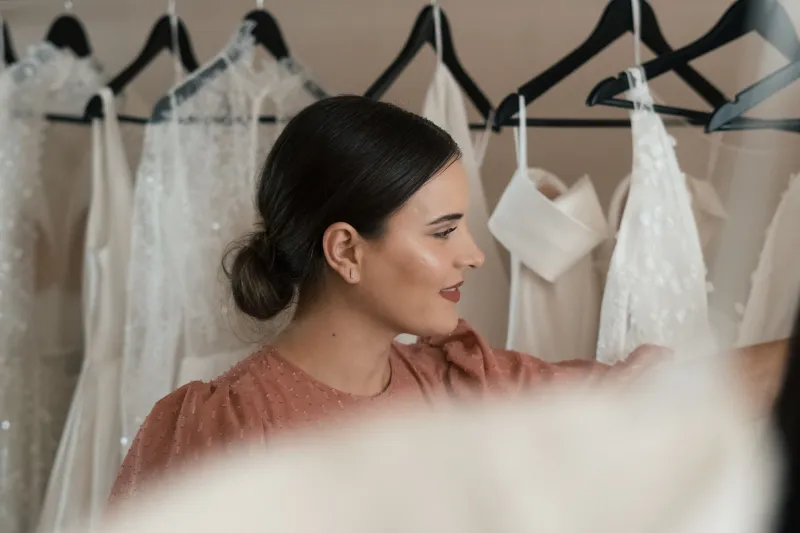
You do not need a boutique. You need a clothing rack, a few sturdy hangers, and a system.
Sort incoming dresses by type first: casual, work, cocktail, and formal. Then sort by size within each type. Put the most colorful or unusual pieces at eye level. Keep hangers facing the same way so the rack looks intentional rather than chaotic.
Set up a try-on zone with a mirror, good lighting, and a chair for shoes. Add sticky notes and a marker so guests can leave notes like runs small or great with boots. A steamer is optional but oddly popular. So is a plate of something salty.
How the actual swapping works
Start with a round robin. Everyone picks one dress. Then go around again for a second pick. After that, open it up to a free-for-all. If two people want the same dress, give each person thirty seconds to make a case for it. The group votes. Keep it playful, not cutthroat.
Add a styling station near the mirror with belts, jackets, and a few pairs of shoes. Ask each guest to name one place they would wear the dress they are considering. If they cannot picture a real event, it goes back on the rack. That one question prevents a lot of regret.
The leftovers are not a failure
Every swap has leftovers. That is normal. Turn the last twenty minutes into a styling challenge: each guest takes one leftover dress and has five minutes to style it with whatever is on the rack. Photograph the results. The point is not to force someone to take home a dress they do not want. The point is to see possibility.
After the party, bag the clean leftovers for a local women's shelter, community clothing closet, or theater group. Damaged pieces can go to textile recycling. A dress that does not work for your body or your life is not a moral failure. It is simply ready for a different story.
First-time host checklist
- Pick a date in late November or early December, before the holiday calendar gets too loud.
- Send invitations with the bring-and-take rules, size zones, and snack sign-up.
- Gather racks, hangers, labels, a mirror, a steamer, and donation bags.
- Set up a private try-on area with good light.
- Keep the tone light and the body talk out of it.
- End with a group photo, a donation plan, and a follow-up text thread for styling questions.
A good dress swap does not require a perfect closet or a perfect body. It requires a room full of people who are willing to let go of what is not working and get curious about what might. That is a pretty good way to start the 2026 holidays.